
From the “It Girl” to Taylor Swift: The Afterlife of Clara Bow
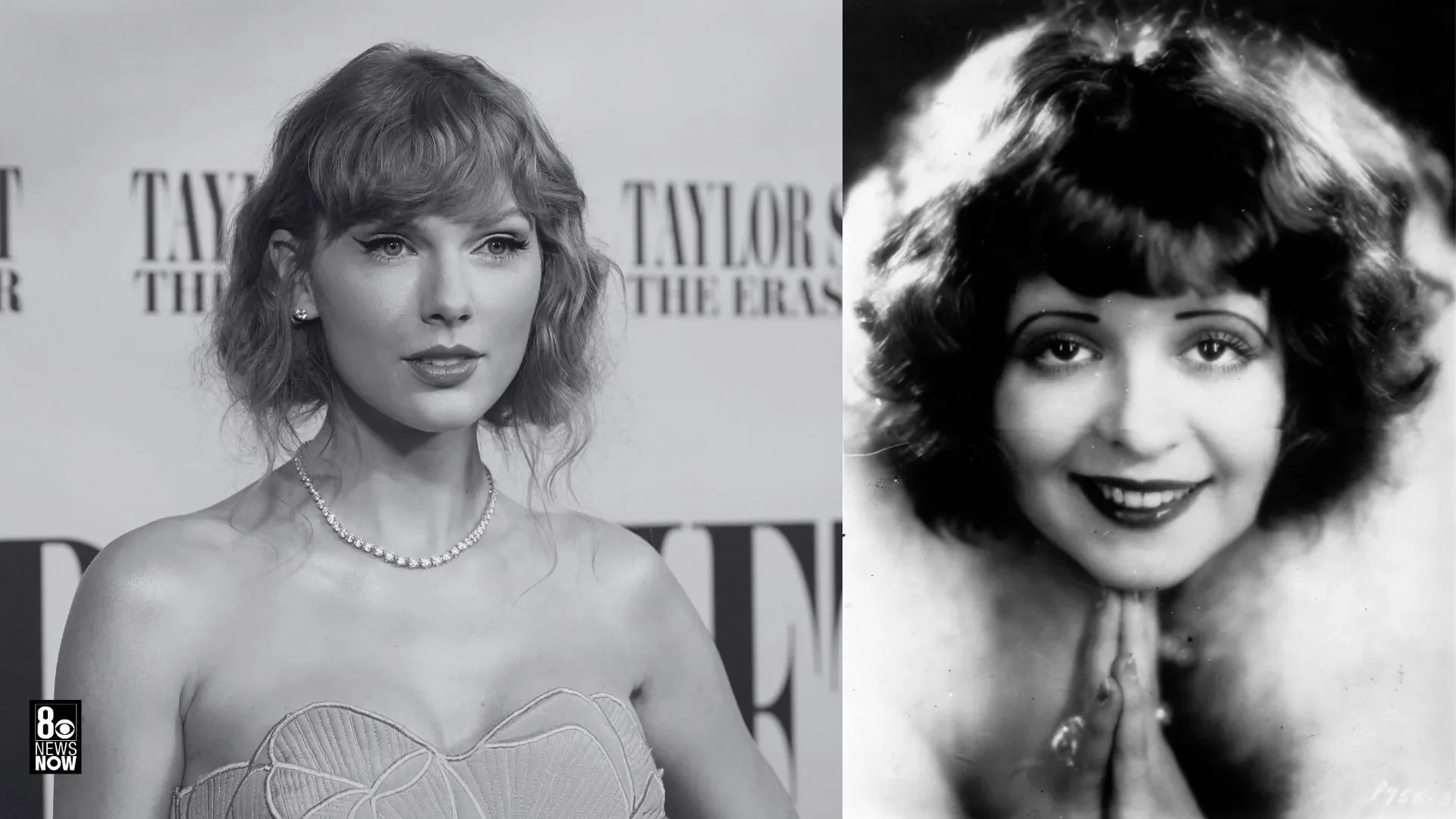
When Taylor Swift released The Tortured Poets Department in April 2024, the final track on the standard album carried an unexpected title: “Clara Bow.” Suddenly, a silent-film star whose career peaked nearly a century earlier was being introduced to millions of listeners who may never have heard her name.
For historians, the connection is especially interesting because Swift’s song is not really a biography of Bow. Instead, Clara Bow becomes a symbol of something larger: the machinery of celebrity and the way popular culture continually searches for its “next” star.
Bow was one of the most recognizable faces of the 1920s. Her performance in the 1927 film It helped cement her reputation as the original “It Girl”—a phrase that came to represent an almost indefinable combination of charisma, sexuality, style, and star power. She became one of Hollywood’s biggest celebrities at a moment when the modern film industry, fan magazines, and celebrity culture itself were still taking shape.
But celebrity came at a cost. Bow’s private life was relentlessly covered by the press, and gossip about her relationships and behavior often overshadowed discussion of her work. The same culture that transformed her into an icon could also turn against her. By the early 1930s, after years of intense scrutiny, Bow began moving away from Hollywood.
That history gives Swift’s use of Bow’s name particular resonance.
In “Clara Bow,” Swift moves through a succession of famous women—Bow, Stevie Nicks, and eventually Taylor Swift herself. Rather than presenting celebrity as a fixed achievement, the song suggests a cycle: a new performer is told she possesses the special quality of an earlier star, only to eventually become the comparison used to describe someone else. TIME described Bow in the song as less a biographical subject than a symbol of charisma, beauty, ambition, and the complicated experience of fame.
The comparison also draws attention to how female celebrity is constructed. Stars are not simply discovered; their images are created, circulated, consumed, and continually compared with the women who came before them. Clothing, photographs, hairstyles, publicity portraits, magazine stories, performances, and even gossip all become part of that process.
That is where the story becomes one of material culture.
Celebrity survives through things.
A photograph can establish a star’s visual identity. A dress can become inseparable from a performance. A newspaper clipping can preserve both admiration and scandal. A house can reveal the private life that existed behind a carefully constructed public persona. When those objects survive, they allow historians to examine celebrity not simply as fame, but as something produced through material and visual culture.
For Clara Bow, one of the most remarkable surviving places associated with that story is here in southern Nevada.
In 1931, Bow married cowboy-film actor Rex Bell, and the couple established Walking Box Ranch near Searchlight. The working cattle ranch also became a retreat from Hollywood, attracting visitors from the film world including figures such as Clark Gable and Carole Lombard. Its name and cattle brand even referenced the movie industry: a box camera mounted on a tripod.
Walking Box therefore preserves something that a movie screen cannot. It connects Clara Bow the icon with Clara Bow the person who sought a life beyond Hollywood. The ranch house, landscape, photographs, personal possessions, and archival records allow us to encounter another chapter of her story—one situated not under studio lights, but in the Mojave Desert.
Today, Walking Box Ranch is preserved by the Bureau of Land Management and is listed on the National Register of Historic Places. Its history brings together Hollywood, ranching, architecture, politics, the environment, and the development of southern Nevada.
Nearly a century after Bow became the “It Girl,” Taylor Swift placed her name back into popular circulation. Bow’s great-granddaughters noted the parallels between the two women, particularly their enormous fame and their experiences with intense public scrutiny. They also expressed hope that Swift’s song would introduce a new generation to Bow’s accomplishments.
That may be the most interesting part of the connection.
History does not always return through a textbook or museum exhibition. Sometimes it returns through a pop song.
A listener hears the name “Clara Bow,” searches for her, discovers the “It Girl,” follows her story west, and eventually arrives at a ranch outside Searchlight, Nevada.
And suddenly, a woman of the 1920s feels startlingly contemporary.